I recently blogged about the anniversary of the death of Sean Taylor, and now I feel the need to blog about the tragedy occurring within the Kansas City Chiefs organization. Jovan Belcher, a linebacker for the team, shot his girlfriend multiple times, reportedly in front of her mother, before driving to the Chief's practice facility and taking his own life in front of many teammates and workers. A 3-month-old daughter was left behind, and the players and staff who witnessed Belcher's suicide are obviously distressed. The event is tragic, and difficult for some people to recover from, and it is saddening to think of the family, friends, and the daughter in particular.
The reason I wanted to blog about this is because it does make me sad, but also it makes me realize more and more how much sports stars are no different than other people making a living. They make a lot of money, sure, but so do a lot of people with other careers. They may even be under more stress as athletes than someone working in industry or medicine is. Just because they are wealthy and famous does not mean they are devoid of problems. They are not perfect, and nobody is. They have issues, and an incidence like this shows how little money affects happiness. Football players are somewhat underpaid compared to athletes in other sports, but they are well off without a doubt. This doesn't stop them from being stressed and having problems in everyday life, some of which lead to tragedies like this. RIP
Sunday, December 2, 2012

Wednesday, November 28, 2012
The ACC is simply falling to pieces. There is no emotion, or other wording that could be used to emphasize that point. That's all there is to it. Oh, wait...you're a basketball fan? In that case, it's great! The addition of Syracuse, Pitt, Louisville, and maybe UConn? It will quite easily be the best, or one of the best basketball conferences in the nation year in and year out. These teams are often playing for national titles, and are amongst the country's elite college basketball teams every year. So yeah, it's going to make for some amazing basketball, and as a fan of college basketball, I have to love that! It should be very competitive, very interesting and will put the ACC ahead of all other conferences in the sport.
Oh, you're a football fan, too? Then I guess I have to give you some insight about the bad side. It's already a weak football conference, with FSU and Clemson being pretty much the only schools with some national recognition. The SEC takes a big dump on the ACC in football, with many more talented and nationally recognized teams. The SEC is just a better football conference in every way, and is clearly the best in the land. The ACC used to compete with the SEC somewhat, and produced several ranked teams each year. But the coming years will likely bring nothing but embarrassment to the conference as far as football goes, because FSU and Clemson will continue to be the only intimidating football teams, and will continue to fall short of expectations and concede national title after national title to the SEC (slightly pessimistic, and I hope I'm wrong, but it looks that way to me). Oh well, yay for hoops!
Oh, you're a football fan, too? Then I guess I have to give you some insight about the bad side. It's already a weak football conference, with FSU and Clemson being pretty much the only schools with some national recognition. The SEC takes a big dump on the ACC in football, with many more talented and nationally recognized teams. The SEC is just a better football conference in every way, and is clearly the best in the land. The ACC used to compete with the SEC somewhat, and produced several ranked teams each year. But the coming years will likely bring nothing but embarrassment to the conference as far as football goes, because FSU and Clemson will continue to be the only intimidating football teams, and will continue to fall short of expectations and concede national title after national title to the SEC (slightly pessimistic, and I hope I'm wrong, but it looks that way to me). Oh well, yay for hoops!
Tuesday, November 27, 2012
Sometimes it hurts to remember, but sometimes that's all you can do. Today marks the anniversary of the death of Sean Taylor, former safety of the Washington Redskins. The reason I wanted to blog about this is that it makes me realize how much sports stars somehow become important people in my life, even when I do not know the athlete personally. For example, if I were to hear a news report about a factory worker in Washington who was murdered during a robbery, I would feel sympathetic for s moment and be disgusted by the actions of the armed robbers, but I would quickly forget the incident. The story of Sean Taylor, however, struck a chord with me emotionally when the story first broke. Did I know him? No. He was a talented star coming out of the University of Miami, drafted 5th overall and was a freak athlete. I hate Miami, and I'm not a fan of the Redskins. I had no interest in the player, just as I would have no interest in a factory worker from Washington.
Why this murder seemed to impact me emotionally is something of a mystery. His house was broken into twice, and the second time, unfortunately, he and his family were home. He was shot in the leg, as I assume the thief meant only to injure, but the bullet it an artery and he died the next day. He had family members hiding under a bed nearby who witnessed the occurrence. I shouldn't feel any more upset about this than I would for any other murder, but the story on ESPN got my attention and made me feel pretty sad. Sports stars just seem, for whatever reason, like they are more important. I knew the name, and I knew his story. He was an innocent man killed for no reason, and it cut a talented safety's life short. I can't explain exactly why the life of a football player seems more important to me than the life of a middle-class worker, as it's not like I could choose between them if I wanted to. The story merely interested me more than the countless stories of murders you read or here about worldwide. I don't know why, that's just how it is. May be it's because he was young and successful, but even then the families of the lost would still feel equal pain and sorrow. Whatever the reason, RIP Sean Taylor and RIP all of the deceased.
Why this murder seemed to impact me emotionally is something of a mystery. His house was broken into twice, and the second time, unfortunately, he and his family were home. He was shot in the leg, as I assume the thief meant only to injure, but the bullet it an artery and he died the next day. He had family members hiding under a bed nearby who witnessed the occurrence. I shouldn't feel any more upset about this than I would for any other murder, but the story on ESPN got my attention and made me feel pretty sad. Sports stars just seem, for whatever reason, like they are more important. I knew the name, and I knew his story. He was an innocent man killed for no reason, and it cut a talented safety's life short. I can't explain exactly why the life of a football player seems more important to me than the life of a middle-class worker, as it's not like I could choose between them if I wanted to. The story merely interested me more than the countless stories of murders you read or here about worldwide. I don't know why, that's just how it is. May be it's because he was young and successful, but even then the families of the lost would still feel equal pain and sorrow. Whatever the reason, RIP Sean Taylor and RIP all of the deceased.
Sunday, November 25, 2012
I can say with some certainty that I will not be the only student writing about this weekend's UF football game. I have to say, as devastating as a loss as it should have been to me, and as disappointed as i would normally be after such a game, I didn't feel all that bad. Maybe it's because I saw the writing on the wall pretty early. I mean they jumped out to a 13 point lead early, and although we fought back and took a lead, we never seemed in control, and turnovers were a huge issue much as they have been all season, and this led to our downfall. Perhaps I wasn't that upset because I couldn't remember the majority of the game, but that's a different story.
It was definitely sad to watch the Gators come out on top, but they have a good team this year, and I have to respect that as a fan of college football. I still firmly believe that our team is much more talented position by position, and that on paper we should have been the favorite. But we were out-coached, and outplayed, and overall just did not perform at a high enough level to overcome the tough defense that UF brings to every game. Their offense is weak, but 5 turnovers made it somewhat of a breeze for them to put 37 points on the board. All in all, I left the game feeling like we were just beat, whether by ourselves or by the other team. I tipped my cap to them, and got over it pretty quickly. The most difficult part of the game to swallow was probably the injury to Tank Carradine, one of my favorite players and one of the key players on our defense. We should still roll over Georgia Tech and go to the Orange Bowl, but it certainly doesn't help to be missing him.
It was definitely sad to watch the Gators come out on top, but they have a good team this year, and I have to respect that as a fan of college football. I still firmly believe that our team is much more talented position by position, and that on paper we should have been the favorite. But we were out-coached, and outplayed, and overall just did not perform at a high enough level to overcome the tough defense that UF brings to every game. Their offense is weak, but 5 turnovers made it somewhat of a breeze for them to put 37 points on the board. All in all, I left the game feeling like we were just beat, whether by ourselves or by the other team. I tipped my cap to them, and got over it pretty quickly. The most difficult part of the game to swallow was probably the injury to Tank Carradine, one of my favorite players and one of the key players on our defense. We should still roll over Georgia Tech and go to the Orange Bowl, but it certainly doesn't help to be missing him.
This Thanksgiving moment is not so much a touching story or memory, but is rather just something I have noticed this past Thanksgiving. I have been a visitor is a family member's home several times for Thanksgiving in the past, but this year, Thanksgiving was held at my house with some close family. It was weird for me to come home for the first time in three months, much longer than I'd ever been away, and have to feel like a visitor in my own home. Perhaps I can't even call it my home anymore, and the small twin-sized bed that I now sleep on and the mini bathroom that I share with 3 other guys are what designate my home now. I was only home for a short time, and after leaving, I realized that I felt like I had been on a small vacation rather than a return home, and that FSU was my true home for the coming years.
That's not to say that I didn't enjoy the time in my house, seeing old friends and getting to see my family again and all. And although I do enjoy the freedom and independence that comes with college, there really is no place like home, at least when it comes to being comfortable. I would take my nice, large bed and comfortable living accommodations in little old Rockledge, Florida over the dormitory here at FSU any day of the week. I missed it a lot, but again, I felt like i had moved on successfully. I no longer felt like it was where I was meant to be. I was officially accepting that my life was changing.
That's not to say that I didn't enjoy the time in my house, seeing old friends and getting to see my family again and all. And although I do enjoy the freedom and independence that comes with college, there really is no place like home, at least when it comes to being comfortable. I would take my nice, large bed and comfortable living accommodations in little old Rockledge, Florida over the dormitory here at FSU any day of the week. I missed it a lot, but again, I felt like i had moved on successfully. I no longer felt like it was where I was meant to be. I was officially accepting that my life was changing.
Thursday, November 15, 2012
Phil is doing an adbuster on steroid use in baseball, with Mark Mcguire as his target for jeering. He will argue that steroid use in baseball is changing the game for the worse, and that it should be eradicated if possible. What I could argue is that steroids and human growth hormones actually make the game more exciting. People like to see power, and that's just what they get from these super-sized hitters. People like to see bigger and stronger athletes, because it gives them more of a reason to be in awe of them, and praise them as demi-gods. It simply makes the game more entertaining to watch, and it draws more fans and thus more money. Therefore, you could argue that the commissioner of baseball, as well as the fans, should not mind this change. Of course the game will change over time, but that is inevitable for every sport. Look at football and the ways it has changed since it was instilled as a major American sport. Sports change, so people who yearn for the past need to shut up and go watch some black and white video. The game of baseball has actually changed very little, and the complaints of fans are geared mostly towards the athletes. Steroids and other drugs do not make you more talented, and do not help you catch up to a 90+ mph fastball. They simply help you recover from injury faster, and help you put on muscle more easily, and therefore people expect more power numbers. Also, it is somewhat of a personal choice, and the athletes should be allowed to make their own decisions as responsible adults. The fans should not concern themselves with the choices of athletes, but rather should focus on maintaining the integrity of the sport itself. People call it "cheating", but if everyone in the game is doing it, are they really gaining any advantage? They are all on an equal playing field, and anyone who has played baseball before knows how little strength actually plays in the game. Players with talent, like Hank Aaron, can hit home runs with regularity even though they are skinny. Hank was not the biggest or strongest player, but held the record for a considerable amount of time. Good bat speed comes from fast-twitch muscle fibers, and squaring the ball up causes it to jump off of the bat, especially when it comes in approaching 90 mph or more. Strength actually plays a small role in hitting, as good hitters come from all different sizes and strengths. People need to just watch the game and enjoy it, rather than worry about what the players do to improve themselves, and simply respect the talent they display almost 162 times a year, or more if they make the playoffs. Hell, who can blame them for doing drugs to improve recovery when they have to step out on the diamond nearly every day?
Tuesday, November 13, 2012
I could use a political reference in my adbuster if I choose to compare the way politicians act in our government and the way players act, or are perceived to act, as role models. For example, in my adbuster, Kobe Bryant will be somewhat villainized, even though the accusations were never definitively proven, and the act was likely only a mistake of being in the wrong place at the wrong time. However, whether it is true or not, we know that the situation was blown up by media because of Bryant's status in the sports world. He is examined under a microscope and ridiculed, just as powerful politicians are today. They have an important job to do, but they are human, as we all are. Therefore, it seems wrong to criticize such people on everything they do rather than to only concern ourselves with the aspects of their lives relating to their job. You could also talk about how mistakes can be used against you, just as political mistakes are used against a representative or party.
Monday, November 12, 2012
Something I have been keeping up with in the world of sport is the swiftness of coaching changes. The most prominent example is the recent firing of Laker's Coach Mike Brown merely 5 games into the season. Think about that...5 games. I think it is utterly ridiculous to think that a person can be on the "hot seat" that quickly without doing something controversial. All he did was implement an offense that was unsuccessful for a time. Sure, that may be cause for firing him much later in the season if the failures continue, but judging that he is not the right fit after only 5 games is just mind-blowing. in today's sports, there is no sense of job security as a coach, unless you have made a name for yourself and become an icon, a face of the franchise which you belong to.
Coaches are so often put on the "hot seat" when a team is losing games, and the team believes it must go in a different direction. I completely understand that this is part of the game. Also, I understand that a franchise like the Lakers, which has experienced so much success in the past, would put a lot of pressure on new coaches to win games with talented players. Clearly Brown's system wasn't working, but I don't think 5 games is even an accurate sample of his ability as a coach. Given more games, maybe the team would adapt to the system, or maybe he would change it altogether. Perhaps the players just weren't playing well and it wasn't the system at all. It just makes no sense to put so much effort into hiring a coach in the off-season only to fire him after such a short span of time. Coaches like Andy Reid of the Philadelphia Eagles have been on the "hot seat" for while, but such coaches are normally given more of an opportunity to figure it out, or at least try to. Oh well, let's see how Mike D'Antoni does with the team now...
Coaches are so often put on the "hot seat" when a team is losing games, and the team believes it must go in a different direction. I completely understand that this is part of the game. Also, I understand that a franchise like the Lakers, which has experienced so much success in the past, would put a lot of pressure on new coaches to win games with talented players. Clearly Brown's system wasn't working, but I don't think 5 games is even an accurate sample of his ability as a coach. Given more games, maybe the team would adapt to the system, or maybe he would change it altogether. Perhaps the players just weren't playing well and it wasn't the system at all. It just makes no sense to put so much effort into hiring a coach in the off-season only to fire him after such a short span of time. Coaches like Andy Reid of the Philadelphia Eagles have been on the "hot seat" for while, but such coaches are normally given more of an opportunity to figure it out, or at least try to. Oh well, let's see how Mike D'Antoni does with the team now...
Tuesday, November 6, 2012
Girl Crying
I would have this picture (just an example at the moment) above a picture of Kobe Bryant looking smug or defiant, and use this to make him appear more villainous.
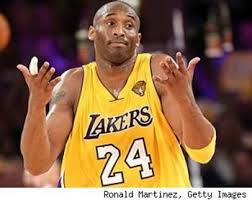
This picture of Kobe shrugging would make it appear as if he didn't care, or did this regularly, and this would lead to several issues of consent and how stardom leads to certain related issues.
I would have this picture (just an example at the moment) above a picture of Kobe Bryant looking smug or defiant, and use this to make him appear more villainous.
This picture of Kobe shrugging would make it appear as if he didn't care, or did this regularly, and this would lead to several issues of consent and how stardom leads to certain related issues.
Thursday, November 1, 2012
I've looked at a couple ideas for adbusters, and the one thing I have decided on is that I intend to make fun of a specific athlete for a fault of theirs in the ad. For example, one idea that crossed my mind was to hone in on Miguel Cabrera's past issues with alcoholism and rehab. I could also include his success and earning of the prestigious triple crown. Perhaps I could show him waving to the fans after hearing he had won the crown, and photoshop a crown from Corona or some other company onto his head and make it look like an ad for the alcohol. I could make it appear as if his success is due to his problems with alcohol.
Sticking to the theme of making fun of athletes, I thought of taking a picture of Barry Bonds hitting the record-breaking home run, with thousands of fans cheering around him, and putting a Nike sign in the corner with the caption "Just Juice It" to play on the Nike motto and on Bond's use of performance-enhancing drugs. Another idea that sprung to mind was photoshopping a picture of a girl, any girl, looking upset or hurt over a picture of Kobe Bryant that is often used in memes, in which he is shrugging and giving a smug smile, as if to say "what can you do?" I would again place a Nike logo underneath the picture and caption it "Just Did It" to allude to Bryant's alleged rape of a woman years ago.
Sticking to the theme of making fun of athletes, I thought of taking a picture of Barry Bonds hitting the record-breaking home run, with thousands of fans cheering around him, and putting a Nike sign in the corner with the caption "Just Juice It" to play on the Nike motto and on Bond's use of performance-enhancing drugs. Another idea that sprung to mind was photoshopping a picture of a girl, any girl, looking upset or hurt over a picture of Kobe Bryant that is often used in memes, in which he is shrugging and giving a smug smile, as if to say "what can you do?" I would again place a Nike logo underneath the picture and caption it "Just Did It" to allude to Bryant's alleged rape of a woman years ago.
Monday, October 29, 2012
Out of every recent advertisement that includes an athlete, the one I like the least is the commercial with Calvin Johnson of the Detroit Lions getting dressed up in luxurious clothing instead of his uniform. First of all, you have to shower first, and a grown man should dress himself. Also, I don't really want to see a half-naked man on television. The commercial's intention is to say a new car, an Acura, is both powerful and elegant. They used Calvin Johnson, a strong and talented all-pro wide receiver, to insinuate power, and dressed him up in expensive, fine clothing to show elegance and luxury. The idea is okay, I just don't find the commercial that interesting. It is a little bit clever, but in the end the company did nothing to talk about the car and it's accessories, so it is pointless. That's just my opinion.
When trying to choose a sports advertisement I do like, I find it hard to choose from the many Sportscenter commercials that include a famous athlete or two, which are all meant to be comical. I find almost every one of them hilarious, as they pick out athletes who have odd quirks or differences, and use them to make a funny commercial. What I really enjoy about them is the fact that they are only funny to those of us who keep up with sports pretty regularly. Some of them, such as the commercial with John Anderson faking an injury when Abby Wambach walks by, are only understood by people who watched or heard about the soccer game in which a player flopped obviously and embarrassingly on the pitch. The fact that some people don't get them makes them entertaining. My favorite, or one of my favorites, is probably the one where a young Kobe Bryant and Keyshawn Johnson are brought into a room where ESPN personalities teach them how to talk to the media. When asked how to address a question regarding a bad call in the game, each player responds that it was a "bad" call or a "cruddy" call. The announcers yell at them and say they have to swear and curse at the media when answering these questions. It's funny to watch, but it's also ironic because both players are quite honest and colorful in their interviews, and commentators really do like these responses because they make good headlines.
When trying to choose a sports advertisement I do like, I find it hard to choose from the many Sportscenter commercials that include a famous athlete or two, which are all meant to be comical. I find almost every one of them hilarious, as they pick out athletes who have odd quirks or differences, and use them to make a funny commercial. What I really enjoy about them is the fact that they are only funny to those of us who keep up with sports pretty regularly. Some of them, such as the commercial with John Anderson faking an injury when Abby Wambach walks by, are only understood by people who watched or heard about the soccer game in which a player flopped obviously and embarrassingly on the pitch. The fact that some people don't get them makes them entertaining. My favorite, or one of my favorites, is probably the one where a young Kobe Bryant and Keyshawn Johnson are brought into a room where ESPN personalities teach them how to talk to the media. When asked how to address a question regarding a bad call in the game, each player responds that it was a "bad" call or a "cruddy" call. The announcers yell at them and say they have to swear and curse at the media when answering these questions. It's funny to watch, but it's also ironic because both players are quite honest and colorful in their interviews, and commentators really do like these responses because they make good headlines.
Thursday, October 4, 2012
ONCE AGAIN I was getting to the best part of my dream with the hottest chick and the freakin alarm goes off...and it went off late! I threw on my filthy clothes with a grunt and heavy breathing, and i had to grind my teeth together to keep from punching a hole in the wall (another one) when i realized the fridge was empty. Just great! Now im hungry, disappointed, tired as hell and late for work for the third time this week. Oh, wait, it gets better...the highway was gridlocked. I sat in the same damn place for almost 15 minutes without moving an inch. I finally start to move and some SOB cuts me off...i hope his little girl in the back seat wasnt old enough to understand the words i spat at him, or the gesture. Finally i speed into the parking lot at work, and squeal into the only space available, about 100 yards from my office. My blood was boiling at this point, and the intense heat radiating off of the asphalt had little to do with that. I stormed into my office soaked with sweat, only to find the AC broken like it was a month before. I slammed my fist down on the desk in frustration, which of course ended in nothing but a broken pinky. I almost screamed as red filled my vision, the daunting day of work ahead of me breaking me down. Finally i sat down long enough to notice the ugly neon colored sticky note stuck to my desktop. I did as it said, and sat outside my boss' office cursing her out in my head as i wondered why she would want to see me and not even be there at the allotted time. By the time she arrived with that fake smile on her plastic face i was ready to imitate the man at the bar who put a fist to snookis face. I withheld, only to learn that "my services were no longer needed". Say what? I work harder than anyone in this godforsaken place, and a few times showing up late gets me booted?! I left without a response, fearing for her safety more than anything. I left quickly (no officer, the tires on the boss' car were slashed before i got there) and sped home. A speeding ticket and a near assault on a cop later, i flew into my driveway and marched inside yelling expletives that my neighbors were quite used to at this point. I attempted to call my girlfriend to let her know what had happened, but i couldnt calm down enough to find the words, and smashed the phone down onto the tile instead. My alarm clock went next. I guess at some point the fracture in my hand got to me, as i finally laid down to nurse my finger with a bag of ice and let the numbness overtake me. One too many shots and i fell back asleep (or blacked out), and i got back my amazing dream, my only hope of escaping reality.
Tuesday, October 2, 2012
My favorite sports movie is probably "The Sandlot". The movie is a classic, and it certainly includes aspects of friendship and the idea of nerds or smaller, nonathletic kids getting something thought unattainable. The theme is a group of friends playing pick-up games of baseball and having to deal with conflict with other children and with "The Beast". They grow together as a group and it shows how struggles can bring friends together. The lonely boy Smalls finally fits in and feels accepted. The goofy nerd gets the hot lifeguard to smile at him with his little trick. Benny is the leader and becomes the superstar, and he is hailed as the perfect character in the story, heroic and talented. They face difficult odds in retrieving the signed ball from the dog, but they work together and do their best to reach their goal (although in a roundabout way). There is even the classic "magical negro" in the story, a blind man who owns the dog and helps the kids out when they work up the courage to ask. He offers them insight and assistance, and seems extremely wise even as poor and blind as he is.
You notice stereotypes in the story such as the skinny, lonely loser who doesn't play sports and is not very good at anything it seems other than school. He longs to fit in, but has to face the stereotypical group of jocks who are reluctant to accept him, but his assistance in their conflicts helps him gain their friendship. The boys have fun playing and hanging out, and they come closer than ever. Benny "The Jet" remains the seemingly perfect character who everyone longs to be. He is the most athletic of the group and is one of the kindest, most modest people in the story. He never shows the cockiness or arrogance of typical superstars, and is a genuine person who was willing to put himself in potential danger to help a new friend who was very desperate. He had nothing to gain, and this stereotypical perfect person is common in many sports movies. Klosterman mentions in his essay ideas of fake reality, and Benny many be one who illustrates this as he is a rare occurrence in the sports world.
You notice stereotypes in the story such as the skinny, lonely loser who doesn't play sports and is not very good at anything it seems other than school. He longs to fit in, but has to face the stereotypical group of jocks who are reluctant to accept him, but his assistance in their conflicts helps him gain their friendship. The boys have fun playing and hanging out, and they come closer than ever. Benny "The Jet" remains the seemingly perfect character who everyone longs to be. He is the most athletic of the group and is one of the kindest, most modest people in the story. He never shows the cockiness or arrogance of typical superstars, and is a genuine person who was willing to put himself in potential danger to help a new friend who was very desperate. He had nothing to gain, and this stereotypical perfect person is common in many sports movies. Klosterman mentions in his essay ideas of fake reality, and Benny many be one who illustrates this as he is a rare occurrence in the sports world.
My favorite "non-sports" movie is currently "TED". The movie seems to be just a romantic comedy (one of my favorite movie genres, hate on it) with little point behind it. However, with a little help I realize that there is a lot of classic ideas woven into the movie related to adult relationships. It seems to have an underlying theme based on the importance of growing up and maturing to fit in with groups in the world. The main character is bullied and anti-social at a young age, and a magical wish gives him a talking teddy bear to befriend. As he grows into a young adult, however, he gets into a serious relationship with Mila Kunis (had to mention her) and struggles with his job and making a reasonable income. Ted remains his best friend and they get into a lot of trouble, and it's pretty funny, but he realizes with a push from his girlfriend that he needs to move on and become a man. This is the central theme behind the movie, as he struggles to keep his best friend, girlfriend and job all at once. He has to make choices and set priorities, something many people have to do as they age, and the movie illustrates this conflict of interests.
The movie includes several stereotypes that are mostly made clear for comical reasons, but they are related to groups in the real world. For example, several stereotypes about Boston natives, pot-heads, and wealthy businessmen are made. There is even an anti-Semitic reference, and stereotypes about people who have yet to let go of something they were not allowed as a child. A creepy father dwells on his childhood love of the bear, and now looks to take him from the main character for his son to play with. He becomes a major antagonist, and this illustrates a key point on how a childhood obsession or anti-social lifestyle can lead to a demented and obsessive adulthood. The businessman in the story is often trying to show off his wealth and play the gentleman to win over the lady, who also falls into the stereotype of a needy woman. She demands attention, which she is not given by her boyfriend because of Ted, and the businessman tries to pry them apart. The references made to categorize people are numerous in the movie, and they are perceived as quite true by most of the American community.
The movie includes several stereotypes that are mostly made clear for comical reasons, but they are related to groups in the real world. For example, several stereotypes about Boston natives, pot-heads, and wealthy businessmen are made. There is even an anti-Semitic reference, and stereotypes about people who have yet to let go of something they were not allowed as a child. A creepy father dwells on his childhood love of the bear, and now looks to take him from the main character for his son to play with. He becomes a major antagonist, and this illustrates a key point on how a childhood obsession or anti-social lifestyle can lead to a demented and obsessive adulthood. The businessman in the story is often trying to show off his wealth and play the gentleman to win over the lady, who also falls into the stereotype of a needy woman. She demands attention, which she is not given by her boyfriend because of Ted, and the businessman tries to pry them apart. The references made to categorize people are numerous in the movie, and they are perceived as quite true by most of the American community.
Tuesday, September 11, 2012
Blog Entry 6
Sometimes I would go out to play pick up basketball or football, and a bead of sweat will form on my forehead, or a persistent fly will buzz next to my ear or into my eyes, and suddenly the field (or court) transforms. I see clay, I feel the summer heat pounding down around me with only the meager shade provided by my hat protecting my face. I recall the often unbearable temperatures and humidity, and the constant presence of flies, gnats and wasps, and one would surely think that the memories would not be so pleasant. Somehow these things make me happy, though. Long practices every day of the week that we didn't have a game, and dealing with the pain and annoyance of repeated drills just made us feel like we were that much better, that we were getting tougher and couldn't lose. One or two sets of parents may be present to watch, there are no butterflies or pregame jitters, but rather just you trying to push through mental and physical exhaustion to get all of the necessary work in. This all comes back to me in vivid clarity every time I swat a bug away or I become aware of the Florida heat bearing down on me. Baseball was a part of my life, something that was not easy to let go of, and I can't help but drift into a bout of nostalgia whenever I see, hear, or feel baseball in the air. Yeah it was miserable sometimes, knowing that a long practice on a hot day was following school, and that while other kids were heading home and getting some food, my teammates and I stayed to get some work in and listen to a scouting report before the next game. Sometimes it can be difficult to explain why athletes enjoy sports so much, but it was just a part of who I was, a part of the group I belonged to and a way of life that certainly affected who I am today.
Every Friday, especially on the day of a big game against a local rival, football players wear their jerseys proudly and get everyone hyped for the lights to come on at 7 o clock. That's something I always found peculiar. They were loud, outgoing and made sure absolutely EVERYONE knew their was a game that day. But not us. Baseball players were quiet on game days. If it weren't for the morning announcements relaying information of sporting events, or the occasional day when we wore our game jerseys to school, nobody would even know we were playing. We drew pretty large crowds, but only because our success was not unnoticed by local sports papers and students. We may not have been the best team around, but we were highly competitive and played with the attitude that we couldn't lose. Of course we did, but we were always told to either have a short memory, or let the pain of defeat motivate you. I guess sports are different that way, or at least the athletes are. Football players at our school seemed to need the support of the students, to feed on the fans and want bigger and bigger crowds. Sure, as baseball players we wanted to be noticed and heralded, but we had an "us against the world" mentality. We felt individually, and as a team, like we were hot stuff, and we played that way. The greatest of athletes need a certain level of cockiness to combat the expected modesty, and we didn't lack any of that. We felt alone, and we liked it that way. Baseball was our passion, and we didn't need anyone else.
Sometimes I would go out to play pick up basketball or football, and a bead of sweat will form on my forehead, or a persistent fly will buzz next to my ear or into my eyes, and suddenly the field (or court) transforms. I see clay, I feel the summer heat pounding down around me with only the meager shade provided by my hat protecting my face. I recall the often unbearable temperatures and humidity, and the constant presence of flies, gnats and wasps, and one would surely think that the memories would not be so pleasant. Somehow these things make me happy, though. Long practices every day of the week that we didn't have a game, and dealing with the pain and annoyance of repeated drills just made us feel like we were that much better, that we were getting tougher and couldn't lose. One or two sets of parents may be present to watch, there are no butterflies or pregame jitters, but rather just you trying to push through mental and physical exhaustion to get all of the necessary work in. This all comes back to me in vivid clarity every time I swat a bug away or I become aware of the Florida heat bearing down on me. Baseball was a part of my life, something that was not easy to let go of, and I can't help but drift into a bout of nostalgia whenever I see, hear, or feel baseball in the air. Yeah it was miserable sometimes, knowing that a long practice on a hot day was following school, and that while other kids were heading home and getting some food, my teammates and I stayed to get some work in and listen to a scouting report before the next game. Sometimes it can be difficult to explain why athletes enjoy sports so much, but it was just a part of who I was, a part of the group I belonged to and a way of life that certainly affected who I am today.
Every Friday, especially on the day of a big game against a local rival, football players wear their jerseys proudly and get everyone hyped for the lights to come on at 7 o clock. That's something I always found peculiar. They were loud, outgoing and made sure absolutely EVERYONE knew their was a game that day. But not us. Baseball players were quiet on game days. If it weren't for the morning announcements relaying information of sporting events, or the occasional day when we wore our game jerseys to school, nobody would even know we were playing. We drew pretty large crowds, but only because our success was not unnoticed by local sports papers and students. We may not have been the best team around, but we were highly competitive and played with the attitude that we couldn't lose. Of course we did, but we were always told to either have a short memory, or let the pain of defeat motivate you. I guess sports are different that way, or at least the athletes are. Football players at our school seemed to need the support of the students, to feed on the fans and want bigger and bigger crowds. Sure, as baseball players we wanted to be noticed and heralded, but we had an "us against the world" mentality. We felt individually, and as a team, like we were hot stuff, and we played that way. The greatest of athletes need a certain level of cockiness to combat the expected modesty, and we didn't lack any of that. We felt alone, and we liked it that way. Baseball was our passion, and we didn't need anyone else.
Monday, September 10, 2012
Blog Entry 5

Klosterman's essay is discussing his theory on how the Celtics-Lakers rivalry can seem to represent all aspects of our lives, including racial, political and ideological disputes. He realizes how ridiculous this idea sounds, but he insists that it is not just a fabrication of his own imagination, but rather that the primarily white Celtics teams led by Larry Bird and the dominant black Lakers teams led by the iconic Magic Johnson relate to all of society's issues and differences. He mentions how race plays such a key role in our minds, and in our lifestyles, as well as in our decisions on who to follow. He compares the Celtics to Republicans, stating that white people looked to the team in hopes of having a sport's team of mostly white athletes, and that the players seemed to have the power. The Lakers, on the other hand, seemed to represent Democrats, with a powerful figurehead leading the way. He claims that the fans of each team are set in a certain mindset, or lifestyle and that their choices must all be similar. The poem by Jones relays an image of a team ending practice with sprints, in which the winner of each sprint gets to leave victorious, and the rest stay for more. He makes note of the way in which some boys hold off until they feel they can beat the other exhausted players, and also of the different ways each of the players runs. He discusses the desire to stop, the way in which it affects each person who fails to win the race. He longs to win, but falls hopelessly short each time. He compares it to a battle, as his coach would tell them to "battle" on.
Both Klosterman and Jones seem to unveil how sports and our community or our lifestyle can join to form a culture. Klosterman's depiction of the Lakers-Celtics rivalry and how it can relate to every aspect of life conveys his ideas that sports may not be something created by the community, but rather something that defines our lives. Perhaps he means to bring up the idea that sports are not just recreation, but maybe they are used to show our deeply-rooted feelings about society and about each other. Elements of race, politics, and social ideas are present in sports, and Klosterman brings this to light. He states that maybe it isn't something we accept, but instead something that we don't realize. Fans did not understand, and still may not, why they felt an affiliation to a particular team, or what social pressures influenced their decisions. Jones looks at how children go through grueling practices, putting much effort in for only a moment of glory and satisfaction, which brings one to question our motives. He mentions monks in Asia burning alive just for peace, which I believe he mentions to bring up the fact that sports are a part of our culture, our history, something that we have always done because we feel the need to "battle" and reign supreme over others. We have a desire to win and feel victorious, and we pit ourselves against each other in competition for this result. Maybe it is innate in human nature, and as we age this desire for victory lessens, or maybe it is present throughout our whole life and simply manifests itself in different ways. Perhaps sports can relate to every aspect of life, and perhaps they are not just an addition to our community and our lifestyle, but an essential part of defining ourselves. We feel the need to compete, and affiliate with a group or team, and such decisions affect how our lives unfold.
Klosterman's essay is discussing his theory on how the Celtics-Lakers rivalry can seem to represent all aspects of our lives, including racial, political and ideological disputes. He realizes how ridiculous this idea sounds, but he insists that it is not just a fabrication of his own imagination, but rather that the primarily white Celtics teams led by Larry Bird and the dominant black Lakers teams led by the iconic Magic Johnson relate to all of society's issues and differences. He mentions how race plays such a key role in our minds, and in our lifestyles, as well as in our decisions on who to follow. He compares the Celtics to Republicans, stating that white people looked to the team in hopes of having a sport's team of mostly white athletes, and that the players seemed to have the power. The Lakers, on the other hand, seemed to represent Democrats, with a powerful figurehead leading the way. He claims that the fans of each team are set in a certain mindset, or lifestyle and that their choices must all be similar. The poem by Jones relays an image of a team ending practice with sprints, in which the winner of each sprint gets to leave victorious, and the rest stay for more. He makes note of the way in which some boys hold off until they feel they can beat the other exhausted players, and also of the different ways each of the players runs. He discusses the desire to stop, the way in which it affects each person who fails to win the race. He longs to win, but falls hopelessly short each time. He compares it to a battle, as his coach would tell them to "battle" on.
Both Klosterman and Jones seem to unveil how sports and our community or our lifestyle can join to form a culture. Klosterman's depiction of the Lakers-Celtics rivalry and how it can relate to every aspect of life conveys his ideas that sports may not be something created by the community, but rather something that defines our lives. Perhaps he means to bring up the idea that sports are not just recreation, but maybe they are used to show our deeply-rooted feelings about society and about each other. Elements of race, politics, and social ideas are present in sports, and Klosterman brings this to light. He states that maybe it isn't something we accept, but instead something that we don't realize. Fans did not understand, and still may not, why they felt an affiliation to a particular team, or what social pressures influenced their decisions. Jones looks at how children go through grueling practices, putting much effort in for only a moment of glory and satisfaction, which brings one to question our motives. He mentions monks in Asia burning alive just for peace, which I believe he mentions to bring up the fact that sports are a part of our culture, our history, something that we have always done because we feel the need to "battle" and reign supreme over others. We have a desire to win and feel victorious, and we pit ourselves against each other in competition for this result. Maybe it is innate in human nature, and as we age this desire for victory lessens, or maybe it is present throughout our whole life and simply manifests itself in different ways. Perhaps sports can relate to every aspect of life, and perhaps they are not just an addition to our community and our lifestyle, but an essential part of defining ourselves. We feel the need to compete, and affiliate with a group or team, and such decisions affect how our lives unfold.
Thursday, September 6, 2012
Blog Entry 4
Dear Tim Tebow,
I'm writing this letter to suggest that you thank Jeff Demps. He is one of the countless players who even gave you a shot at being anything other than mediocre, assuming of course that you call yourself anything but mediocre. Honestly, you should've stuck with baseball. I know you were a good baseball player and had a chance at a good career...why give that up for crappy football? Sure, you won a Heisman and championships at Florida, but cmon...you won games because of the talent and speed around you and you won the Heisman because people like your personality and...well, because of the speed and talent around you. Many of the players you played with in college are leading successful lives in the NFL, and I would argue heavily against anyone who says your run of games with the Broncos was "spectacular". To be honest, I think you get more media attention due to the hype surrounding you and because most people want you to do well. You're deeply religious, and you say the right things when the cameras are pointed toward you, so I'm not going to hate on you as a person (although crying after a loss and being given the name "Tim Tearbow" and coach "Urban Cryer" is certainly not manly in the eyes of most. Seriously, how can you expect to lead a team when you cry after a loss? Pick your team up for goodness sake...).
Your passer rating was significantly lower than the average for an NFL quarterback even in your won games...your success in the fourth quarter can be attributed more to Denver's defense stepping up or a sense of urgency that always brings out the best in a player. Sure, you can run the ball, but so can Cam Newton, who impressed in his rookie season. Maybe it's because he can actually throw the ball...quarterbacks are supposed to lead and be consistent throughout the game, not just in one quarter. That comeback, "clutch" mentality may have worked when you were surrounded by the best athletes in the collegiate game, but it won't work when you're up against professionals. Work on your passing game, take a seat and enjoy some Jet's games even when they suck, and maybe a spot will open up for you when Sanchez chokes games away or they trade you to a team with no QB. Maybe while you're in NYC you can hit up a church on Sunday and pray (oh God please make me better!) and head over to a Giant's game and sit with the Manning family...maybe you'll learn a thing or two. Anyways, I hope divine intervention does more for you than the worthless talent you have....it got you this far, and it's your only chance.
Dear Tim Tebow,
I'm writing this letter to suggest that you thank Jeff Demps. He is one of the countless players who even gave you a shot at being anything other than mediocre, assuming of course that you call yourself anything but mediocre. Honestly, you should've stuck with baseball. I know you were a good baseball player and had a chance at a good career...why give that up for crappy football? Sure, you won a Heisman and championships at Florida, but cmon...you won games because of the talent and speed around you and you won the Heisman because people like your personality and...well, because of the speed and talent around you. Many of the players you played with in college are leading successful lives in the NFL, and I would argue heavily against anyone who says your run of games with the Broncos was "spectacular". To be honest, I think you get more media attention due to the hype surrounding you and because most people want you to do well. You're deeply religious, and you say the right things when the cameras are pointed toward you, so I'm not going to hate on you as a person (although crying after a loss and being given the name "Tim Tearbow" and coach "Urban Cryer" is certainly not manly in the eyes of most. Seriously, how can you expect to lead a team when you cry after a loss? Pick your team up for goodness sake...).
Your passer rating was significantly lower than the average for an NFL quarterback even in your won games...your success in the fourth quarter can be attributed more to Denver's defense stepping up or a sense of urgency that always brings out the best in a player. Sure, you can run the ball, but so can Cam Newton, who impressed in his rookie season. Maybe it's because he can actually throw the ball...quarterbacks are supposed to lead and be consistent throughout the game, not just in one quarter. That comeback, "clutch" mentality may have worked when you were surrounded by the best athletes in the collegiate game, but it won't work when you're up against professionals. Work on your passing game, take a seat and enjoy some Jet's games even when they suck, and maybe a spot will open up for you when Sanchez chokes games away or they trade you to a team with no QB. Maybe while you're in NYC you can hit up a church on Sunday and pray (oh God please make me better!) and head over to a Giant's game and sit with the Manning family...maybe you'll learn a thing or two. Anyways, I hope divine intervention does more for you than the worthless talent you have....it got you this far, and it's your only chance.
Wednesday, September 5, 2012
Blog Entry 3
This reading was very interesting to me as it really forces you to consider the varying levels of interest and participation in sports, and the ways in which these levels have changed over time. For example, it is clear that women have become more interested in ports than they used to, partially due to the introduction of legislation such as Title IX, but also due to the success and growth of women's sports, and therefore increased use of females in advertising. The author makes clear the difference between participation athletes and high-performance athletes. Some people are only meant to play to a certain level, and I can relate. My dad was a baseball player, and played for FSU while he attended college here. He coached me from a young age, and I have always loved baseball because of it. However, my athletic skills simply are not on par with Division I collegiate athletes. My devotion and passion is there, but the talent for this level is lacking. I realized this, and I had to overcome the thought of it. On the other hand, some simply don't have the desire to commit to the pressure and expectations of sports at an elite level. They only wish to play for recreation, and that is just the way it is.
A lot of the material in this passage could be used for our papers, as it covers a broad range of topics including general information about each. It appears that the line between elite athletes and participation athletes can be blurred by varying talent levels and devotion to the sport. This may be an issue worth noting in the paper. Also, mention of race, social class and gender in sports may be crucial to showing the ways in which sports have changed over time, or the ways in which each sport differ. Age is even a factor worth discussing, as there is certainly a movement away from intense, physical team sports and toward lower-stress, individual sports. There are so many factors influencing both the athletes and the spectators interest in sports that it will be easy to consider how our own experiences are unique and discuss them.
This reading was very interesting to me as it really forces you to consider the varying levels of interest and participation in sports, and the ways in which these levels have changed over time. For example, it is clear that women have become more interested in ports than they used to, partially due to the introduction of legislation such as Title IX, but also due to the success and growth of women's sports, and therefore increased use of females in advertising. The author makes clear the difference between participation athletes and high-performance athletes. Some people are only meant to play to a certain level, and I can relate. My dad was a baseball player, and played for FSU while he attended college here. He coached me from a young age, and I have always loved baseball because of it. However, my athletic skills simply are not on par with Division I collegiate athletes. My devotion and passion is there, but the talent for this level is lacking. I realized this, and I had to overcome the thought of it. On the other hand, some simply don't have the desire to commit to the pressure and expectations of sports at an elite level. They only wish to play for recreation, and that is just the way it is.
A lot of the material in this passage could be used for our papers, as it covers a broad range of topics including general information about each. It appears that the line between elite athletes and participation athletes can be blurred by varying talent levels and devotion to the sport. This may be an issue worth noting in the paper. Also, mention of race, social class and gender in sports may be crucial to showing the ways in which sports have changed over time, or the ways in which each sport differ. Age is even a factor worth discussing, as there is certainly a movement away from intense, physical team sports and toward lower-stress, individual sports. There are so many factors influencing both the athletes and the spectators interest in sports that it will be easy to consider how our own experiences are unique and discuss them.
Monday, September 3, 2012
Blog Entry 2
In "Three Man Weave", the author recalls a memory in which he witnessed a team of Native Americans, significantly favored to lose the game against their juco opponent, win a basketball game with only three players on the court. They had no size, no true offense, and started the game with only five players on the roster. The final seconds were played with three. Yet, somehow they won, and that shocked the author, but such little publicity hid this remarkable event from the world. Nobody knew of it, and few cared about this seemingly unimportant basketball game.
The poem seems to be about a memory in which the author remembers the coming of football each October in his hometown, recalling how it affects the attitude of the people and how kids clash against each other during the football games. He realizes that football is what they all have in common, and that no matter what their own lives have in store for them, they relish the game.
It seems that sports bring these people together, from all of their different backgrounds they come to watch the same competition, or to compete. They share the same goals of winning and having a good time playing the sport they love, and it is clear that the racial differences and different house-life of the people in a given place mean nothing when it comes to a game. Some say they use sports to "escape" their lives, and this seems to be an accurate way to describe it. They all play with one goal, one universal idea of winning. Both pieces rely on the recall of a memory, and they are seemingly both nostalgic. This is important to all of us and to these writers, as we love sport for the way it makes us feel, the way it allows us to dedicate ourselves to one common goal. The memories of sports, either good or bad, stick with us and drive us to strengthen our love for the game. Both pieces also show us how sports affect small communities, or a repressed culture. it shows us that cultures or communities will utilize sports to feel that they are on equal grounds, to feel like they have opportunities. Communities have hopes and dreams, and these pieces convey how sports are used to achieve such hopes and dreams, or to escape reality.
Such stories have always brought one specific question to mind: are repressed cultures or small communities more sport-oriented for a reason? In all professional sports, there are stories of athletes coming from underprivileged homes and who had rough childhoods, and yet they are now some of the best athletes in the world in their sport. Why is this seemingly so common? I believe these areas or these cultures feel that sports allow them to compete with the world on a level playing field, and that their drive to succeed and to be the best is higher than the motivation of privileged athletes. They may not know from a young age that they can use sports to escape financial hardships, but they do use athletics to escape their hard lives mentally.
I feel that my personal experiences are vastly different, as sports began as recreation for me and developed into a passion, and this may be a point that I make in my paper. I may describe how it is weird to consider that other children played sports because it was the only option to them, the only thing they wanted to do because they felt that their lives were otherwise meaningless. Sure, I love sports, but I can't honestly say that i ever believed my life held no meaning without it. I do feel that many communities or cultures feel this way, and it may be worth stating in my paper how this impacts our differences. Using memories of events to make universal statements, suggestions, or to raise questions may be something I do in my paper to emphasize how sports can be more than just recreation.
In "Three Man Weave", the author recalls a memory in which he witnessed a team of Native Americans, significantly favored to lose the game against their juco opponent, win a basketball game with only three players on the court. They had no size, no true offense, and started the game with only five players on the roster. The final seconds were played with three. Yet, somehow they won, and that shocked the author, but such little publicity hid this remarkable event from the world. Nobody knew of it, and few cared about this seemingly unimportant basketball game.
The poem seems to be about a memory in which the author remembers the coming of football each October in his hometown, recalling how it affects the attitude of the people and how kids clash against each other during the football games. He realizes that football is what they all have in common, and that no matter what their own lives have in store for them, they relish the game.
It seems that sports bring these people together, from all of their different backgrounds they come to watch the same competition, or to compete. They share the same goals of winning and having a good time playing the sport they love, and it is clear that the racial differences and different house-life of the people in a given place mean nothing when it comes to a game. Some say they use sports to "escape" their lives, and this seems to be an accurate way to describe it. They all play with one goal, one universal idea of winning. Both pieces rely on the recall of a memory, and they are seemingly both nostalgic. This is important to all of us and to these writers, as we love sport for the way it makes us feel, the way it allows us to dedicate ourselves to one common goal. The memories of sports, either good or bad, stick with us and drive us to strengthen our love for the game. Both pieces also show us how sports affect small communities, or a repressed culture. it shows us that cultures or communities will utilize sports to feel that they are on equal grounds, to feel like they have opportunities. Communities have hopes and dreams, and these pieces convey how sports are used to achieve such hopes and dreams, or to escape reality.
Such stories have always brought one specific question to mind: are repressed cultures or small communities more sport-oriented for a reason? In all professional sports, there are stories of athletes coming from underprivileged homes and who had rough childhoods, and yet they are now some of the best athletes in the world in their sport. Why is this seemingly so common? I believe these areas or these cultures feel that sports allow them to compete with the world on a level playing field, and that their drive to succeed and to be the best is higher than the motivation of privileged athletes. They may not know from a young age that they can use sports to escape financial hardships, but they do use athletics to escape their hard lives mentally.
I feel that my personal experiences are vastly different, as sports began as recreation for me and developed into a passion, and this may be a point that I make in my paper. I may describe how it is weird to consider that other children played sports because it was the only option to them, the only thing they wanted to do because they felt that their lives were otherwise meaningless. Sure, I love sports, but I can't honestly say that i ever believed my life held no meaning without it. I do feel that many communities or cultures feel this way, and it may be worth stating in my paper how this impacts our differences. Using memories of events to make universal statements, suggestions, or to raise questions may be something I do in my paper to emphasize how sports can be more than just recreation.
Thursday, August 30, 2012
Blog Entry 1
Baseball players don't cry, right? You can't cry on the field...but I was. Sure, everyone who truly loves sports or has a personal interest or affiliation with a certain sports team, whether college, professional, or any other level, realizes at some point that athletics mean something to them. Maybe it's the times before big games on college football Saturdays when you feel butterflies causing turmoil in your gut, the nerves eating at you as you hope and pray that your team ends the day victorious. Maybe it's the times that you wake up miserable, curled up in the fetal position after your favorite team lost to a rival or was booted from the playoffs. These times make you realize that sports mean something to you more than just having something to do. It's not a game anymore, it's a passion, even if your playing years are behind you.
Sports certainly mean a lot to me personally. Let's revisit the crying boy standing on the diamond. I'll be honest, I was not a great baseball player when I was younger, always smaller and less talented, but I tried. As I got older and practiced more, I got better and I held my own on varsity in high school. But at one time, I stood in the middle of centerfield on the dying (or already dead) grass and cried, feeling more alone than I can ever remember feeling, simply because I could not catch a damn fly ball. It was a normal practice, and at that time in my baseball "career" I was an outfielder primarily, but did pitch a little. It may have been the first practice with a new team, and I distinctly remember some of my elementary school friends playing with me. Some were better, some not, but on this particular day I dropped nearly every fly ball hit by the coach swinging a stupid metal fungo (they should ALWAYS be wood). After several opportunities, the coach must've noticed how upset I was, and stopped practice to talk to me and tell me it was alright. Yeah, that helped...
I was terribly embarrassed, and it was one of the only times I ever felt sorry for myself so much that I cried on the field. Sure, my dad was a college baseball player at FSU during his time, but he never forced it on me and I could've quit at any time. This is when I knew sports meant something to me. I never contemplated quitting, and I kept trying, and I was proud of myself all throughout high school as I played fairly well, pitching a considerable number of innings and only giving up two earned runs the entire season my senior year, both to a team ranked number one in the nation by several reputable polls at one point. I just couldn't imagine life without baseball at that time, and both the sadness I had felt and my desire to keep playing allowed me to understand my true love for the game.
Baseball players don't cry, right? You can't cry on the field...but I was. Sure, everyone who truly loves sports or has a personal interest or affiliation with a certain sports team, whether college, professional, or any other level, realizes at some point that athletics mean something to them. Maybe it's the times before big games on college football Saturdays when you feel butterflies causing turmoil in your gut, the nerves eating at you as you hope and pray that your team ends the day victorious. Maybe it's the times that you wake up miserable, curled up in the fetal position after your favorite team lost to a rival or was booted from the playoffs. These times make you realize that sports mean something to you more than just having something to do. It's not a game anymore, it's a passion, even if your playing years are behind you.
Sports certainly mean a lot to me personally. Let's revisit the crying boy standing on the diamond. I'll be honest, I was not a great baseball player when I was younger, always smaller and less talented, but I tried. As I got older and practiced more, I got better and I held my own on varsity in high school. But at one time, I stood in the middle of centerfield on the dying (or already dead) grass and cried, feeling more alone than I can ever remember feeling, simply because I could not catch a damn fly ball. It was a normal practice, and at that time in my baseball "career" I was an outfielder primarily, but did pitch a little. It may have been the first practice with a new team, and I distinctly remember some of my elementary school friends playing with me. Some were better, some not, but on this particular day I dropped nearly every fly ball hit by the coach swinging a stupid metal fungo (they should ALWAYS be wood). After several opportunities, the coach must've noticed how upset I was, and stopped practice to talk to me and tell me it was alright. Yeah, that helped...
I was terribly embarrassed, and it was one of the only times I ever felt sorry for myself so much that I cried on the field. Sure, my dad was a college baseball player at FSU during his time, but he never forced it on me and I could've quit at any time. This is when I knew sports meant something to me. I never contemplated quitting, and I kept trying, and I was proud of myself all throughout high school as I played fairly well, pitching a considerable number of innings and only giving up two earned runs the entire season my senior year, both to a team ranked number one in the nation by several reputable polls at one point. I just couldn't imagine life without baseball at that time, and both the sadness I had felt and my desire to keep playing allowed me to understand my true love for the game.
Subscribe to:
Comments (Atom)